"Misleading Banners" or why advertiser rejected my creatives? (1)
"Misleading Banners" or why advertiser rejected my creatives?
Quite often, misleading ads appear while you’re surfing the internet. You see them all the time, whether you realize it or not. Most users out there just seem to ignore the ads, which forces publishers to use all the textbook-tricky methods to get their attention.
[Disclaimer: This post was originally published on mobidea Academy. All the missing information can be found in the full version].
But what’s a misleading banner? And what's actually a banner?
Don't worry if you know this already - there is still some information here that's good to be reminded 
A banner is a powerful tool and one of the most efficient ways to generate sales and achieve success in the affiliate marketing world. It communicates an advertiser’s message to a user. It’s a graphic image (with or without text), that’s used as an ad with the main goal of attracting as many users as possible.
This is your first interaction with a user as a potential customer. This means that the banner you work with is the face of your company/product. The problem is that people often choose the easiest method and prefer using wrongful and untrustworthy ways to achieve success.
That’s how misleading banners enter the picture. It’s always better to make 20k in the long run than 5k tomorrow and then be mercilessly blocked.
What's misleading advertising?
Misleading advertising is giving the wrong idea or impression about the content of the offer by using deceptive banners to promote it. Your job as a publisher is to promote using efficient and honest banners. Our advice for you would be to use the most authentic call to action as possible.
In fact, go for expressions such as “Click here”, “Download now” and “Subscribe here”. These work wonders since they engage customers to click your banner and can help you increase your CTR to boot!
When working with affiliate networks, it’s important to understand their rules and restrictions, specifically when it comes to the use of banners. Networks and advertisers are constantly checking and monitoring the quality of the traffic they receive, since quality is key in this industry!
What are the misleading banners we’re talking about?
To make sure we’re on the same page, let’s see them one by one.
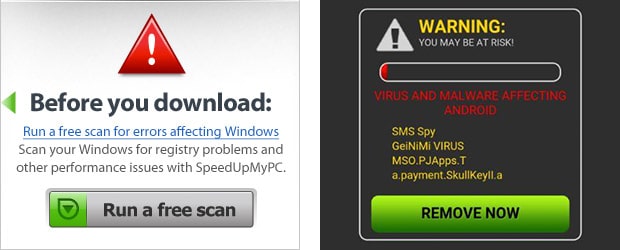
1. Antivirus banners with virus alerts
Check this example:
Bad use of banners
Good use of banners
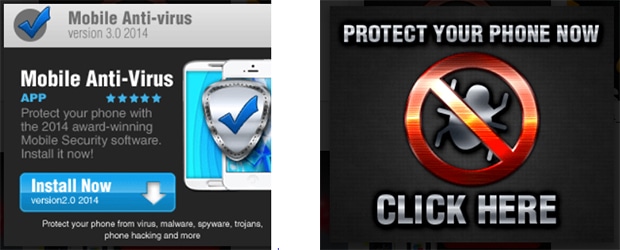
Black background, and red letters, with an Alert sign? What could be more “appealing” to force a user to download/subscribe?
The thing is that you, as a publisher, can’t really detect whether or not there’s a virus on your device. That’s why the banner can’t state that the device is in danger. More than that, many antivirus pop-ups will appear, the phone will start vibrating, the user panics and clicks on all confirmation buttons available.
Now imagine that, besides all this, the users are unable to leave the page. They can’t even close the ad! Trust us: this sort of shenanigans is gonna get you in trouble with both the affiliate and traffic network!
This is unfair and dishonest to your users which obviously won’t become leads after all.
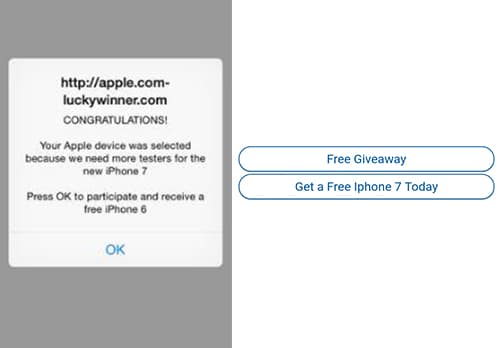
2. Congratulations! You’ve won!
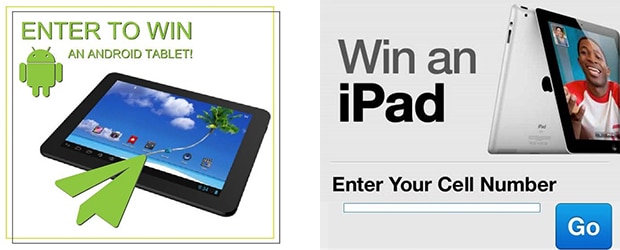
Remember 3 strictly forbidden sentences: “Free”, “Congratulations”, and “You’ve won!” Those can be used, of course, but only if you’re certain that users will actually get a reward by clicking on the confirmation button.
What kind of reward? It can be an incentive and may not even be allowed, according to the offer’s restrictions. Don’t promise something you can’t give! It’s misleading! It’s better to give a chance to win instead of actually promising a sure victory.
Bad use of banners
Good use of banners

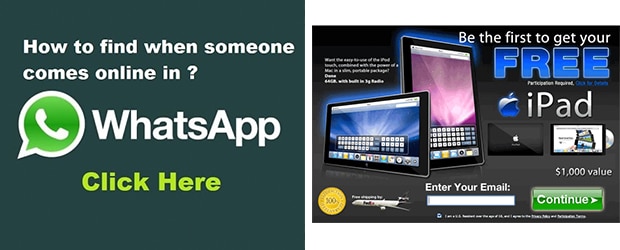
3. Use of copyrighted images without the brand’s permission
Bad use of banners
Good use of banners
Nowadays, brands are everything and most of the times their logos speak louder than words to attract people’s attention! When choosing your banner, always make sure you’re not using images like the ones shown on the “bad examples” above.
Using this type of materials is completely forbidden since you’re using a brand’s image and its copyrighted content without legal permission. In this case, law and justice can be involved!
You can even be warned or banned from affiliate networks. Please listen to us funky gals and ALWAYS follow our advice! When you create your campaign, make sure the banner you’re gonna use doesn’t have any logo or brand name used without permission, since that can get you in trouble.
4. Don’t blind lead your traffic to offers which content users are not aware of or do not match the banner
For example, we’ve searched for a website to download Rihanna songs. And this is what appeared:
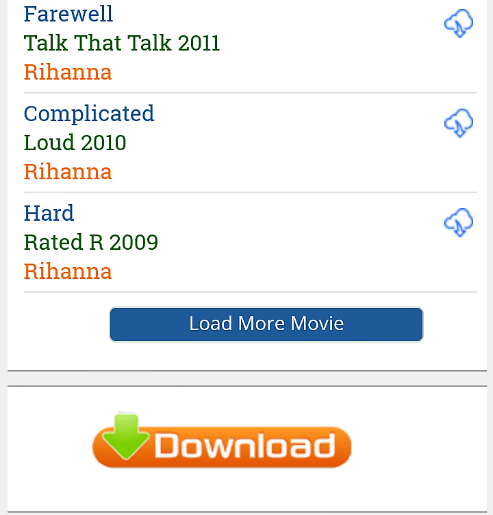
When clicking the DOWNLOAD banner-button, we were redirected here:
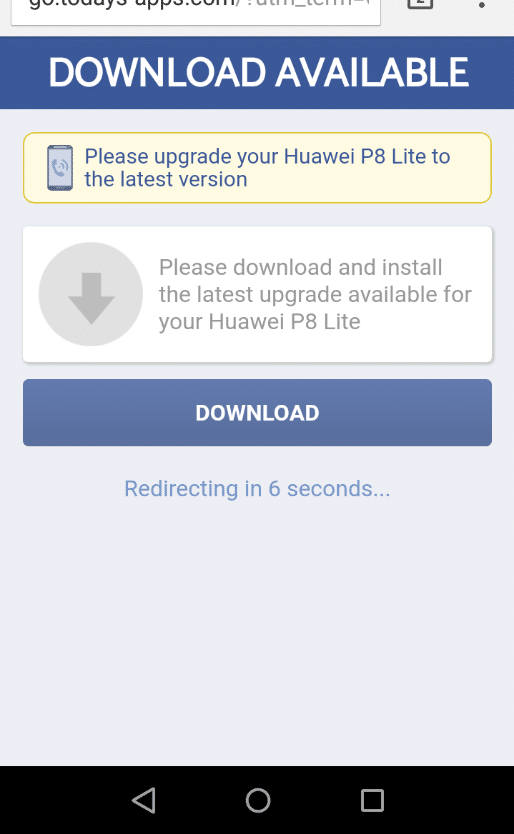
In the end, a misleading banner redirects to a misleading pre-lander.
Great, right? Do we really wanna click any further? Hell no!
These aren’t the Rihanna’s song we wanted, and more than that, we’ll remember there’s such a download button and will ignore it even if there’s a real offer behind.
This is when the Publisher (owner of the webpage) is involved because this rotten practice will scare users away! Another type of blind lead can be addressed when using a banner that redirects the user to a signup form, where the form doesn’t provide any info about the offer’s content the users are signing up for.

This basically means you’re leading your user into a dark zone where they don’t know what kind of content they’ll get. This can be harmful for you because you can lose conversions due to a lack of info or misinformation.
By using blind leading, you can also notice that user’s expectations from the Call-to-Action of the banner end up being thwarted since they’re directed to something completely different.
It’s a case of expectation management, besides the obvious problem you can have with your affiliate program. Never forget that it’s your reputation and image that can be destroyed forever. As a result, you can be punished by the network, which starts losing trust in you as a publisher.
Conclusion – What You’ve Gotta Remember!
Never forget: the trick for you to build a trustworthy, lasting, and profitable business relationship is to be as honest as possible. You need to get quality leads that’ll spend money on your offers.
To do it, you’ll need to use banners that have a good performance, follow the promotional rules, and are an accurate preview of the offer’s content.
In the end, you’ve gotta be totally honest with the audience and use banners and a call to action that match the offer’s content. Moreover, it’s important to analyze all the aspects, including your target group, considering their interests, so that you can deliver quality content.
If a visitor signs up for the offer and gets what the banner has promised, it’s possible that they’ll continue to subscribe in the future. On the other hand, if your banner promises something totally different from the actual offer, it’s most likely that you’ll lose that potential user.
Got any doubts about the banner you wanna use? You can always get in touch with your Account Manager, or contact the experts of your affiliate network’s Support Team. They are there for a reason: to help you when you have questions assaulting your brain and making you feel insane!
Home > Design - Imagery, Banners & Landers >