Insights from Psychology and Behavioural Economics That Savvy Internet Marketers Use (25)
Insights from Psychology and Behavioural Economics That Savvy Internet Marketers Use
A large part of Internet marketing depends on understanding and exploiting human psychology and behaviour.
What are some of the best insights from psychology and behavioural economics that YOU have successfully used in your campaigns?
Here are a few to get the discussion started, all of which I have personally successfully used at one time or another on creatives, ad copy, images and even emails:
So, let's assume there's a movie theatre selling popcorn.

Large........$7.00
Small........$3.00
Nearly, every person bought the small. When asked why, they said they felt $7 is tad too costly for a popcorn.
Now after employing decoy effect, a median size "medium" was introduced (its sole purpose being a tool for comparison - that is, a decoy)

Large.........$7.00
Medium.....$6.50
Small........$3.00
and these were the revised prices.
Now, everyone bought the large because they felt large is reasonable because it is only 50 cents more than the medium.
All you have to do is stroll through a grocery store to see this happen again and again with different sizes of products and different prices. “I can get 24 cookies for $3 or 48 cookies for $5… but look over there, that bag of cookies has 36 cookies for $4.50. This 48 cookie bag is a real bargain!”
If you notice keenly, they exploit this "comparison" loophole of our brain to sell the exact thing they want and what we don't actually need. People tend to think of prices in relative terms and not absolute terms.
THE ANCHOR EFFECT
Lets see an example where you want DONATION
I want donation from someone for some cause and do not want to force them with an exact number here are two ways to do it
Option 2 : Sir, We are doing XYZ for poor children, some donation from you will help! A lot of people have donated their 1 week salary, which is equal to $500, but you can donate whatever you want!
The Guy - $500 seems too much to me right now, I can do maximum $50.
You - Fine, any amount is good for poor children!
So you got $50 because you anchored the person subconsciously with $500 and that is used as benchmark for taking decision.
So anchoring is just a trick to plant a number in other's mind so that you are benefited.
For a real-world example of this consider the following experiment: a few years ago, supermarket shoppers in Sioux City, Iowa, encountered a sales promotion for Campbell’s soup at about 10% off the regular price. On some days, a sign on the shelf said 'LIMIT OF 12 PER PERSONS'. On other days the sign said 'NO LIMIT PER PERSON'. Shoppers purchased an average of 7 cans when the limit was in force, twice as many as they bought when the limit was removed.
THE COCKTAIL PARTY EFFECT
In the world of Internet marketing, with so many ads and banner blindness, making savvy use of the cocktail party effect becomes even more powerful.
THE TRUSTWORTHINESS SCALE
According to research conducted by Princeton University scientists, computerized images show the spectrum of trustworthiness. With a neutral face scored at 0, the most trustworthy face (with a score of 8) shows upturned eyebrows and lips, while what the scientists concluded was the least trustworthy face (score, -8) had eyebrows pointing down and lips curled at the edges.

COLOUR PSYCHOLOGY
And this red colour is partly responsible for the fast food craze throughout the world. We certainly know the popularity of fast food is due their great gastronomic qualities.
Most of the brands have put a lot of research to figure out which colour works best to stimulate that particular emotion which can drive the sales of their products. The image below shows few examples

THE MERE EXPOSURE EFFECT
He was able to practically demonstrate this effect in 1960 using an experiment:
Zajonc tested the mere-exposure effect by using meaningless Chinese characters on two groups of individuals. The individuals were then told that these symbols represented adjectives and were asked to rate whether the symbols held positive or negative connotations. The symbols that had been previously seen by the test subjects were consistently rated more positively than those unseen. After this experiment, the group with repeated exposure to certain characters reported being in better moods and felt more positive than those who did not receive repeated exposure.
Does this mean that if some company is shitty rich then it can make me like their crap product by just drowning me with their ads which will in turn again fill up their coffers? Well, you have probably heard of all the companies from the previous example, McDonald's, KFS, Pizza Hut, Coca Cola, etc. etc. etc.?
THE MINT EFFECT
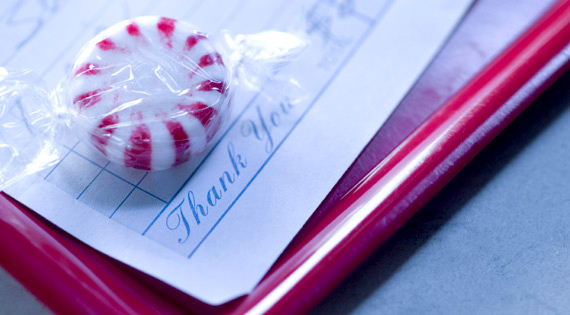
Waiters in a Restaurant were divided into three groups.
The first group included waiters/waitresses giving a single mint with the check, and also no mention of the mint itself. This increased tips by around 3% against the control group.
The second group changed things up by having the servers bring out two mints by hand (separate from the check). In addition, they mentioned them to the table ( i.e. "Would anyone like some mints?"). This saw tips increase by ~14% against the control group. Well played.
The last group had waiters bring out the check first along with a pair of mints. A short time afterwards, the waiter came back with another set of mints, and let customers know that they had brought out more mints, in case they wanted another. This last group saw the increase of 23% against the control group.
Sources: Various online sources and Quora
WOW this thread is pure awesomeness. All of them are awesome!
I just forwarded that mint case study to a friend that owns a cafe, I want her to try it out herself.
Excellent post as usual cmdeal.
Here in the UK there is a tv show called Horizon which covers all sorts of interesting science. They recently had one about behavioral psychology in which the Anchor Effect that you describe above was used. Here's what they did:
Showed random passersby the product, in this case a nice looking bottle of champagne. Tell them it's good quality.
Then, unconnected, get them to choose a ball randomly from a bag of balls which have numbers on. The trick is, the number on each ball was always 10.
Then ask them what is the max that you would pay for the champagne.
The average price that they said came in at around £10.
Did the experiment again with new people, and this time the number on the balls that people picked out was always 65.
Asked them what is the max that you would pay for the champagne.
The average was about £35.
Same product just a different number planted in their heads changed the outcome significantly.
Awesome post man  when i used to organize raves wed throw tons of promo parties all over the place and give away tickets to build a base of mass. Because in my experience people said the party was kickass if it was packed. So we made sure theyd always be packed by ensuring our base was there to create the mass effect.
Hi,
This is my first post. Been reading for some time and now it's time to open the gates.
Anyone interested in Behavioural Economics should read/follow anything from Dan Ariely -> http://danariely.com
He also has an online course at Coursera that I recommend if you have some time.
https://www.coursera.org/course/behavioralecon
It started in March but you can access past material without problems.
Kind regards
 Originally Posted by ershaka

"Dear Dan,
I often buy a breakfast sandwich from my regular café. Sometimes, I take the empty paper wrapper, walk five meters to the trash bin, dispose of the wrapper and walk back to my seat—a perfectly convenient sequence of events. But other times, I try to throw the wrapper into the trash from my seat. I am a lousy shot, and when I (inevitably) miss, I have to make the same journey to the bin. But on these occasions, the trip feels like a chore.
Why do I feel so differently about the same journey?
—Richard
The answer lies in the realm of counterfactuals. When you aim and miss, you can clearly imagine a world in which you sunk your shot, and you judge your efforts by comparison to that imagined world—and, in relative terms, feel bad about it. But when you don’t even try to hit the trash can, there is no other world to imagine and no contrast to make you feel bad.
My suggestion: Buy your sandwich and your coffee, but ask the café to serve you the coffee three minutes later. Then sit with your sandwich and try to aim the wrapper at the trash can—and, no matter how successful you are, get up and walk to the counter to pick your now-ready coffee. If you made the basket, great; if not, pick the wrapper on your way to get your coffee. This way, there is no world in which you did not have to get up after your shot, no counterfactual and no comparison. Happy breakfast."
The Decoy Effect should be well-known in IM/AM (all product owners at least!) and general marketing, but it's good to get refreshed on this stuff!
Thread is solid, thick, tight. Looking good cmdeal.
Yeah, indeed. The best part of all is the use of plain language and the common examples he uses.
Regarding the second example he points out in his post and also related to the original post in this thread. Check this BK offer:
http://4.bp.blogspot.com/-dG4ZKye4FW...BK+Stacker.jpg
What's wrong with it?
All extremely good stuff!
If anyone's interested in learning more about insights like this (which do work very well, incidentally - I've used most of them at one point or another), I'd recommend starting with the book "Influence" by Robert Cialdini, and following up with "Yes! 50 Secrets From The Science Of Persuasion" by the same author. Awesome stuff.
Originally Posted by ershaka
Originally Posted by wozz
I found the programme you mentioned online here http://www.dailymotion.com/video/x1m...group-org_news

It is quite well made. I highly recommend it.
This thread is one i'm going to keep open, just seeing how i can relate some of this to my campaigns. Really gets the juices flowing!
Going back to that study about leaving mints with the bill. I sent it to my girlfriend who works at a cafe, who passed it onto her boss, who then passed it onto the company staff list, getting them to study up!
I'm going to the cafe this week to check out if this STM thread made a change at that cafe!
Originally Posted by Mr Green
@cmdeal - Thanks for starting this fascinating topic - mastering the art of persuasion will give us affiliate marketers a HUGE leg-up for sure. Next time I mod my adult dating lander I'll use the image of a smiling MILF. 
@caurmen - Thanks to you, here I am at 2:26am reading a 389-page PDF (Cialdini's "Influence") and watching an hour-long vid "The Power of Persuasion" (Cialdini's lecture at Stanford). If I fall asleep at the 10-day meditation retreat which starts on Wednesday it'll all be your fault.
I'm doing more reading on this topic as I'm writing this. Reading this at the moment:
http://www.quora.com/Psychology/What...ological-facts
More importantly, some of the same "tricks", when used adequately and with love being the motivation behind the actions, can greatly improve personal relationships too - I'm referring to stuff like this (from the quora thread):
"So to recap:
Make a person fall in love with themselves and they'll fall in love with you.
Take what a person offers, at least occasionally, to tell them they have value.
Allow a person to contribute within their skills and abilities to let them know they are needed and a part of your family.
Ask a person for help to reaffirm their self worth and to endear yourself to them."
I found a list of cognitive biases which looks VERY interesting - some of these can be easily worked into ad copy:
http://en.wikipedia.org/wiki/List_of_cognitive_biases
Will add more gems to this post as I find more.
Amy
Originally Posted by vortex
I feel like if homesless people gave out mints... they would see quite the increase in money.
This thread is amazing! Thank you!
Great stuff here, thanks cmdeal! Another great author on this thread is Daniel Kahneman (books: thinking, Fast and slow,...). His books made me really thinking how important this is!
While we're inside the pschology worm-can, does anyone know the principle why name, or phrases, usually have the same first letter? ie David DeAngelo or Road Rage
It's alliteration, the repetition of the sounds: http://www.psychologicalscience.org/...s/2008/lea.cfm
Originally Posted by xentaa
awesome stuff!!!! saved this thread for evening reading.... if i could give 2 x thanks i would
Originally Posted by pawly
The guy is awesome.
There was a great STM interview with him a few months ago here: http://stmforum.com/forum/showthread...ANSWERS-Part-1
Home > General > Affiliate Marketing Forum